The effectiveness of Official Development Assistance as judged by the French
Published on 20/04/2022.
| In partnership with University College London (UCL) and the University of Birmingham, Focus 2030 is conducting an action-research program to analyze citizens’ opinions, attitudes, knowledge and feelings on issues related to international solidarity This program covers four countries: France, Germany, the United Kingdom, and the United States.
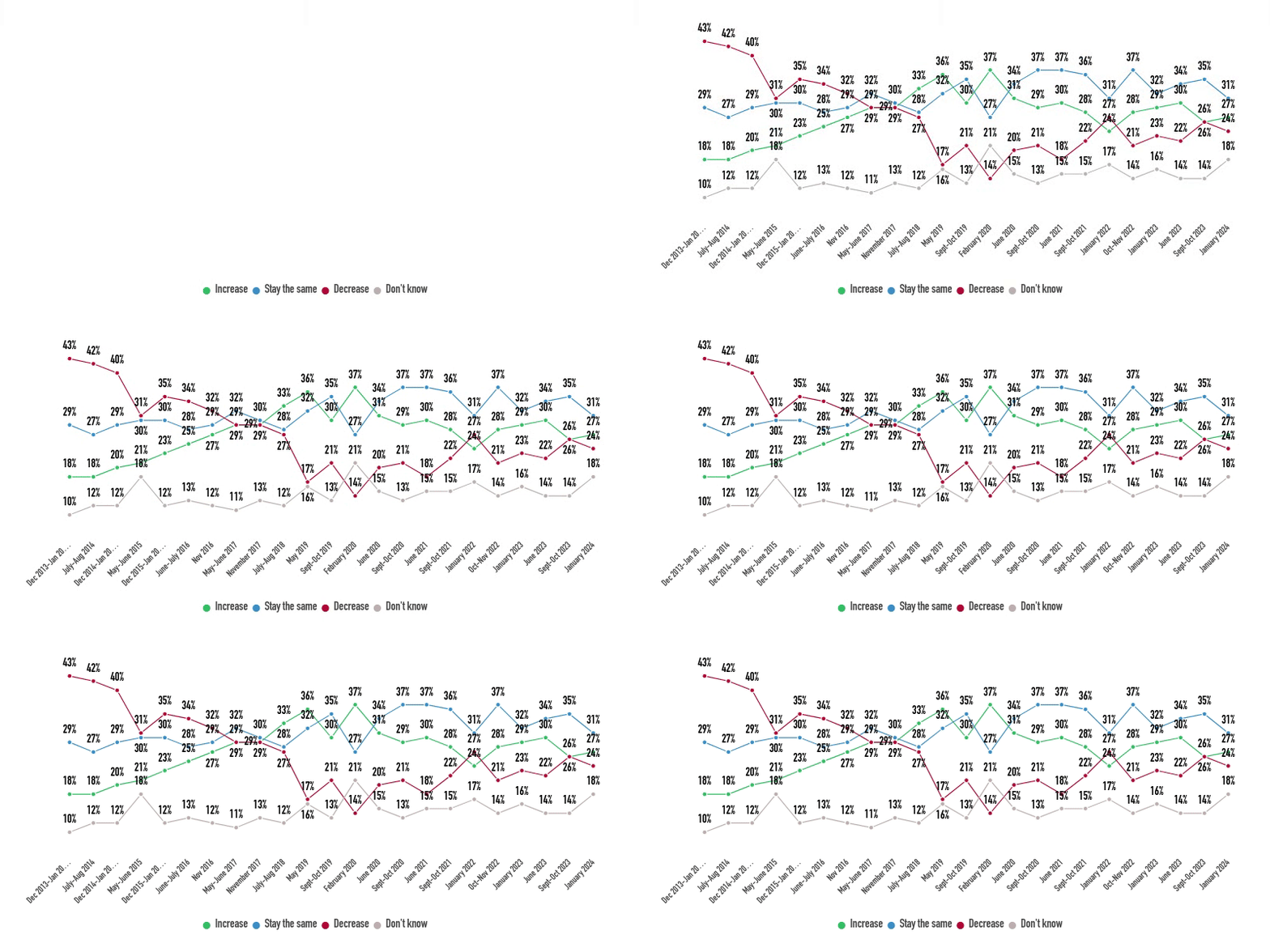
This project called the “Development Engagement Lab” (DEL) provides data to development actors (NGOs, foundations, think tanks, ministries, public institutions, international organizations) to help them better understand citizens’ expectations and increase the effectiveness of their communication, mobilization and advocacy activities. Three times a year, French people are questioned about their support to ODA, which slightly increases over time. |
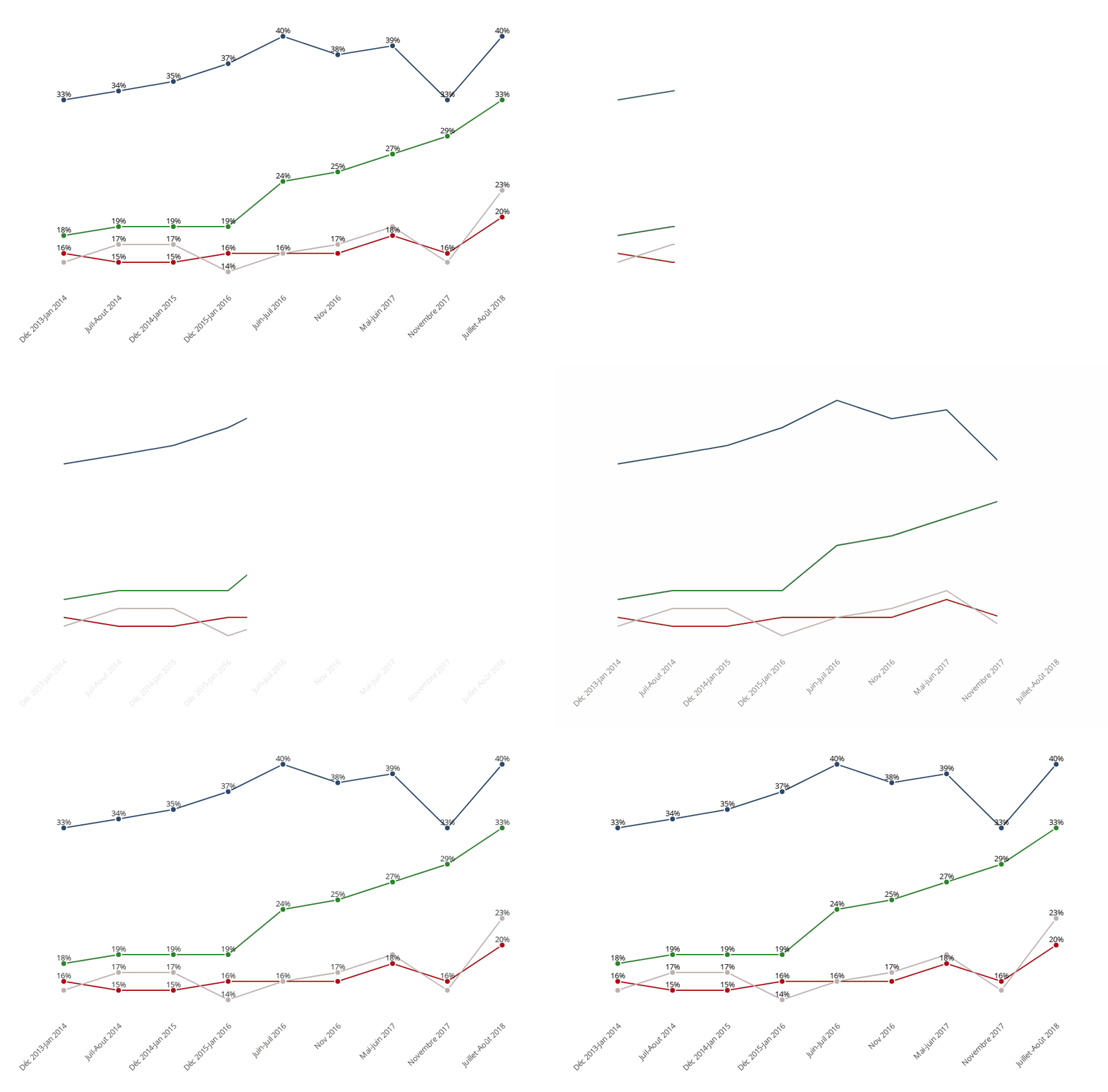
French people are harsh judges of the effectiveness of Official Development Assistance (ODA). When asked, only 13% declare they believe ODA to be effective, compared to 22% who say it is ineffective.
The proportion of people considering ODA as effective has increased by 4 percentage points since November 2017. Following the same logic, the percentage of people considering ODA is ineffective dropped by 13 percentage points over the same period of time.
Above all, those results demonstrate that ODA is not well known in France. In the surveys the DEL program conducts, 45% of French people do not express an opinion on the effectiveness of ODA (+9 percentage points since 2017). This percentage is associated with the 20% who do not know how to answer this question.
Paradoxically, the point of view of French people about the “effectiveness” of ODA does not really vary according to socio-demographic parameters such as age, gender, education level, or political preferences.
On the other hand, French views about “inefficiency” are more common among right-wing sympathizers (+6 percentage points compared to left-wing sympathizers) and among French people over 35 years old.
This data comes from our survey conducted by the YouGov Institute and piloted by the research team at University College London and the University of Birmingham as part of the Development Engagement Lab project, which measures the evolution of opinions and behaviors on issues related to international solidarity in four countries.